
Translate

Showing posts with label business. Show all posts

Friday, August 29, 2025

VC-Backed Women Hackers Blast Taylor Swift in Their Shared House

Featured Image

A Day in the Life of Ava Poole

Ava Poole has been awake for nearly 24 hours. It's 4 a.m., and she's been working nonstop on a presentation about her startup. Taylor Swift's "New Year's Day" plays in the background, while four empty cans of Coke Zero litter her workspace. Despite the sleep deprivation, the 20-year-old told USA TODAY that "this is truly the happiest I've ever been."

Poole is a member of FoundHer House, an all-female hacker house located in San Francisco. On the early hours of August 18, she and her fellow residents were preparing for their Demo Day on August 19. Over 400 investors, other founders, and members of their network RSVP'd to hear the eight women pitch their AI, fintech, healthcare, climate, real estate, and social media tech companies with the aim of getting feedback and funding.

The pressure was nothing new to these women. FoundHer House members have raised millions of dollars in venture capital funding from top firms and generated over half a billion social media views. They've filed patents, landed fellowships with companies like Bain Capital Ventures, and built products that reach tens of thousands of customers. All while hosting female-focused movie nights, fireside chats, and panels with their San Francisco community.

In male-dominated Silicon Valley, FoundHer House members said their all-woman space to support one another’s startups has inspired fresh optimism and confidence at a time when technology products and services are dramatically shifting. Artificial intelligence poses an existential threat to entry-level tech jobs. That effect is exacerbated for women: Research from the University of North Carolina at Chapel Hill published in April 2023 found 21% more women face AI job automation than men, even though men outnumber women in the workforce. And even if they decide to go out on their own, female founders receive less than 3% of venture capital funding, according to PitchBook, which tracks investments.

On top of that, tech companies are rolling back diversity initiatives in alignment with President Donald Trump's anti-DEI push, with companies like Meta cutting programs designed to boost hiring of women and marginalized communities in the industry.

FoundHer House members say coworking and cohabitating, and building a community online helps them look forward, collectively achieving and sharing that journey with their followers.

Efforts to boost women in Silicon Valley aren't new, according to Birgit Neu, a London-based diversity and inclusion adviser who also worked in digital in the early days of the internet. But FoundHer House has come at a very specific juncture, when many women are asking, "How are we still here?" FoundHer House represents how younger generations have responded to industry shifts, Neu said. "I think they're on the frontier," Neu said. "We had a playbook for thinking about how to support women, and that evolved over the past 10 to 15 years ... (FoundHer House) is designing a future they're actually interested in participating in."

Hacker Houses and the Rise of FoundHer House

Hacker houses are integral to Silicon Valley culture, group homes for tech aficionados with billion-dollar dreams looking to find that special idea or partner, all while solving the issue of San Francisco's expensive housing. Turning a housing problem into a business opportunity is a common theme in the internet age: Think back to the YouTube content creator houses of the 2010s. There have also been other female hacker houses, like HackHer House.

In most cases, these kinds of spaces are rarely majority women, FoundHer House cofounders Miki Safronov-Yamamoto, 18, and Anantika Mannby, 21, told USA TODAY. "We quickly realized those spaces aren't designed with women in mind," Safronov-Yamamoto said. "A change needed to happen." So the University of Southern California sophomores found a rental property in March and pitched venture capital firms to help subsidize rent.

"Taking the bet on making it happen was the hard part," Mannby said. When some VCs didn't offer support, the two were "fierce and unrelenting," she said. "That's a thread through all the girls in the house, you have to be a little bit crazy and self confident in order to do these things," Mannby said.

Nearly 100 young women applied to live in the house for the summer and eight were accepted. Safronov-Yamamoto said a core requisite in applicants was "kindness." "We were able to get such a diverse set of people," Mannby said. She added the women living in the house run the gamut from college drop-outs to a former Team USA karate athlete.

Residents pay just over $1,000 per month, sleeping two per room (average rent in the city is at least $3,000 for a one-bedroom). They quickly formed a bond, mapping dreams for the summer on their communal white board. "We would plan out our all events," Mannby said. "And we'd show up in flocks. ... It's really cool when you walk into a room and see a sea of men and then there's group of eight girls. We like to say we fix a ratio wherever we go."

The Power of Community and Influence

Poole found the house through connections from a previous work experience. She wanted to be around other women who can talk at the dinner table about things like honing agentic systems, building secure stablecoin wallets and yes, Taylor Swift. "I wanted to go deeper," Poole said of why she applied. "To have a community of dreamers, not just supporters, and a place I could really work 24/7. It's nice to do that in a place that feels fun as well."

Poole works to music at 2X speed reverbed, an indication the hustle isn't waning. But she also spent the weekend at a San Francisco Giants game and giggled through midnight pre-Demo Day delirium. "That energy is palpable and helps prevent burnout for me," Poole said. FoundHer House gives Poole balance and "femininity," she said. "It feels like we're all helping each other," she said. "Every conversation, I'm helping move the boat an inch forward and everyone's rowing."

Influencers meet entrepreneurs. The women living in FoundHer House are the latest in a wave of entrepreneurs leaning on influencer tactics to extend their reach. The house built on members' existing followings. Fatima Hussain, 19, runs @fatimas.guide, an Instagram guide to college with over 100,000 followers. Mannby has nearly 60,000 Instagram followers personally and her company, Treffa, has over 30,000. Their roommates' high engagement inspired Safronov-Yamamoto and fellow resident Chloe Hughes, 21, to start creator profiles, too.

Brand partnerships in the form of yacht parties, table tennis tournaments, and Nobu dinners in New York City hosted by Rho, a business bank that supports FoundHer House, have provided financial support. "Our thinking was there's so many women who haven't moved to SF, who haven't taken that leap," Mannby said. "But the more we share our stories and our lives, the more it inspires people to take the leap themselves."

With their rising profiles has come some judgment, Safronov-Yamamoto said: "We have had our fair share of hate comments on our personal social media accounts. ... They're doubting or work or doubting our abilities." But social media helps them raise awareness that tech jobs exist for young women, Poole said. "We want to give women a platform to come to SF, get to know the tech scene and be in a place they can reach out because they know they exist and feel confident enough to do that," Poole said. "That supersedes these other ripple effects going on."

Looking Ahead

As summer winds down, FoundHer House members are planning their next moves. Some are moving into offices, instead of school. Others are considering time away from academia. Poole will stay enrolled at Cornell, but aims to live in New York City to work on Paygent, her startup that is a wallet that manages financial apps, rewards, and subscriptions ("Apple Pay 2.0!" Poole calls it). She's learned to value community more than ever and wants to surround herself with people that give the same feeling FoundHer House provided.

"It feels like there's always someone there to lift you up, especially in a space that's so risky," Poole said. "It's that extra feeling of someone has my back always."

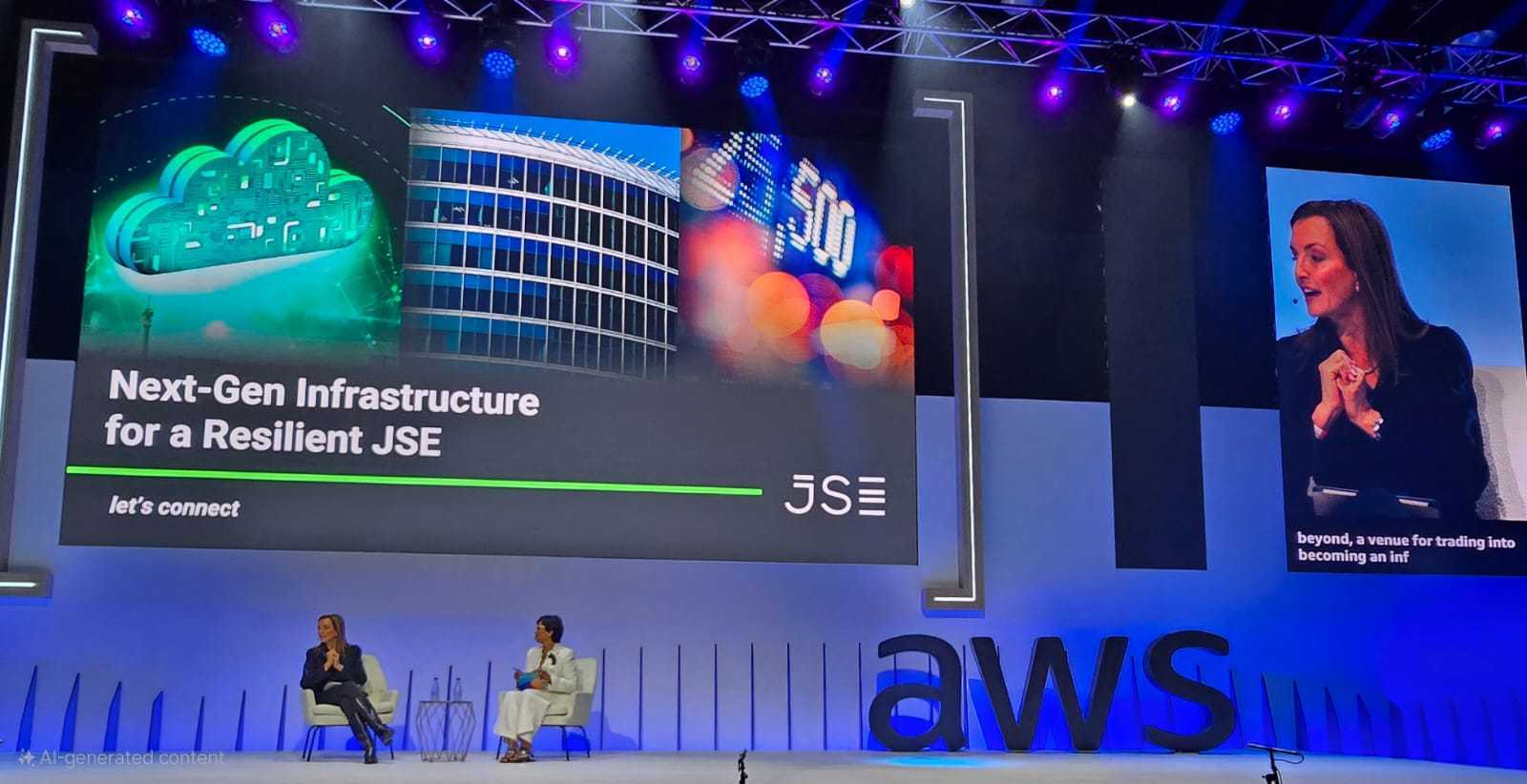
AWS Summit: SA Banks Leverage Cloud to Expand Global Lead

Featured Image

South Africa’s Banks Leverage Cloud Technology to Lead in Financial Innovation

South Africa's financial institutions are redefining the landscape of banking technology, with cloud computing serving as a cornerstone for innovation. For years, the country's banking sector has demonstrated remarkable prowess, often pioneering electronic banking solutions long before many global counterparts. Today, cloud technology is emerging as a key differentiator, allowing South African banks to maintain and even expand their competitive edge.

At the recent AWS Summit held at the Sandton Convention Centre, industry leaders from major financial institutions such as Absa, Capitec, and the Johannesburg Stock Exchange (JSE) shared insights on how cloud platforms are transforming their operations. Breakout sessions featured discussions from Standard Bank, Old Mutual, and Sanlam, highlighting the growing role of cloud infrastructure in driving financial services forward.

Johnson Idesoh, group chief information and technology officer at Absa, emphasized that the focus is on leveraging the cloud to gain a competitive advantage. "There are fundamental dynamics in a market like South Africa that inherently make it very innovative," he said. "The real imperative is to help more customers secure their financial future. This drive for financial inclusion applies across the continent."

Idesoh pointed to several factors contributing to this innovation, including a digitally savvy population and a regulatory environment that encourages competition and technological advancement. With major cloud providers such as Amazon Web Services, Microsoft, Oracle, Google, and Huawei establishing hyperscale data centers in the country, South African banks now have access to some of the world’s most powerful computing platforms.

"The cloud enables us to drive innovation not only because of the speed at which these companies innovate, but also because they create an ecosystem where other parties can build upon their work," said Idesoh. "From a customer perspective, this is a huge benefit for a bank like Absa. The second reason is speed and agility. In a world where response time is critical, we value our partnership with AWS."

This agility has led to the development of new solutions, but for Idesoh, the benefits extend beyond just speed. "You can codify your security policies on the cloud, which is a powerful enabler," he explained. "Cost is another factor—while it can be expensive if not managed well, the cloud offers a consumption-based model that allows us to focus on value and customer outcomes, resulting in lower costs."

While Absa focuses on AWS-driven agility, Capitec has used the platform to revamp its fraud prevention systems. Andrew Baker, chief information officer at Capitec, highlighted the importance of moving away from traditional on-premise infrastructure. "There's no advantage in simply migrating what you have to the cloud—it's costly and inefficient," he said. "Our goal was to create two data centers side by side for greater stability."

The cloud has significantly enhanced Capitec's ability to detect and prevent fraudulent transactions. "We have a major issue with fraud in South Africa, and it's a complex problem to solve. On-premise systems lack the computational power and tools needed for real-time interception of payments," Baker explained. "Now, we can pull payments out of the network instantly if something is wrong, which would be impossible with traditional infrastructure."

Capitec processes over 15,000 card payments per minute, handling billions of transactions annually. Its chief data officer, Azhar Said, emphasized the scale of the operation: "We process over 1.5 trillion reports per month, generating around 27 petabytes of analytical data. Over 1,000 technical users on our AWS platform, along with 6,000 employees across the business, rely on data from dashboards and reports."

This cloud-powered insight is also fueling financial inclusion. "Traditional banks often struggle to serve clients without a financial history," Said said. "By using alternative data and AI on AWS, Capitec can provide banking services to those who are typically excluded. This includes small working capital loans for street vendors, helping them grow their businesses and improve their lives."

The Johannesburg Stock Exchange (JSE), another key player in South Africa's financial ecosystem, is also embracing cloud technology. Dr. Leila Fourie, CEO of the JSE, described the exchange as the heartbeat of the country's capital markets. "We facilitate trading activity of 27 billion rand per day, with peaks above 30 billion. Our systems have maintained 99.4% uptime for the last three years," she said.

The JSE is partnering with AWS to transition from legacy mainframe systems, aiming to calculate at scale and open up new product capabilities. "We're launching next-generation colocation services and advanced analytics products," Fourie added. Her vision extends beyond Johannesburg, aiming to position the JSE as a gateway into Africa by aligning infrastructure standards and opening up liquidity pools between South African and U.S. markets.

Idesoh encapsulated the spirit of South Africa's financial sector: "Cloud technology empowers us to continuously transform. Our customers benefit from it every day." As cloud adoption accelerates, South African banks are setting a global example of how innovation, agility, and inclusivity can reshape the financial landscape.

Labels

APPEALING America Amérique Artprint Avec Bandouilliere| Berlin Bettmann Bijoux Black Boutique Buit your own eiffel Cadeau Cadeaux Cairngorms Canada Chateaubriand. Chopin Claude Coffret Count down Couple Delaunay Design Durrens Edition Eiffel Eiffel Photo Eiffel in soap Eiffel pajamas Eiffelturm Grösse Größe HEBAGermany Honeymoon Thrills at Cheaper Deals Kunstdruck Laiton Leinwandbild Magasin Main Modernism Mémoires National Noir P.... Paris Park Photo Photographic Photos Pictorial Poster Print Reviews Robin Romantic Honeymoon Rouge| Royal Ruth Révolution STUNNING Savon Sculpté Sehenswürdigkeiten Souvenir Souvenirs States Stylobille Timothy Toile Toiles Top Island Destination Tour Tower United Wampler Wedding anniversary in Paris Wedding anniversary celebration in Paris acheter aimantée album amazonfr. angleterre années autumn baptême barcelone berlinois bilingue bois bordeaux boutiques boîte cavalier chansons chili comme d'antan d'art d'ici d'outretombe. d'un dimanche débuts eiffel 65 eiffel demos eiffel in bag eiffel in book eiffel in cake eiffel in canvas eiffel in lamp eiffel in rain eiffel in shirt eiffel in snow eiffel in software eiffel in sunrise eiffel in sunset eiffel kiss eiffel rain eiffel souvenir entretiens françaisanglais gens guerre honeymoon honeymoon destination hotel in paris hôte. job justice l'exposition ligne livraison mécanique n°01 n°019 n°033 n°039 n°047 n°09 n°51 obscurs officierà orchestres originaux patines... pittoresque polonais portraits pour route santiago. schwarzweiss shiny strange eiffel picture sudouest suite suivre. taking talents tirage tivoli tours témoignages universelle usus.i valparaiso vieilles vieux voyage événements