Translate

Showing posts with label innovation. Show all posts

Friday, August 29, 2025

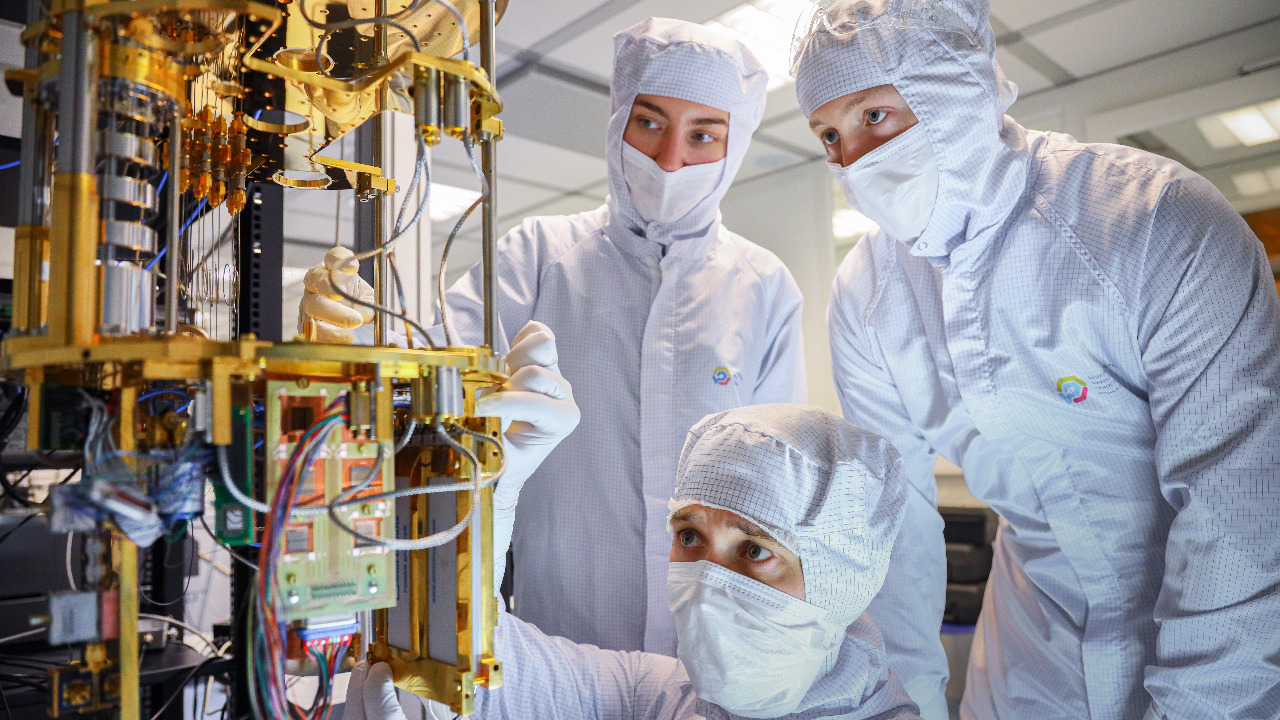
New Quantum Bit Design Discovered by Scientists

Featured Image

The Evolution of Quantum Computing

Quantum computing has undergone significant transformation since its inception in the early 1980s. Pioneered by physicists like Richard Feynman and David Deutsch, the concept aimed to leverage quantum mechanics for computations that far surpass classical capabilities. Early qubit designs were built using simple systems such as trapped ions or superconducting circuits, which provided foundational insights into quantum information processing.

Over time, several milestones have marked the progress of this field. For instance, Shor’s algorithm in the mid-1990s demonstrated the potential of quantum computers to factor large numbers exponentially faster than classical systems, highlighting their implications for cryptography. Additionally, the demonstration of quantum entanglement and teleportation showcased the unique properties of quantum systems, paving the way for more advanced qubit technologies.

Despite these advancements, traditional qubit designs have faced challenges. Decoherence, where qubits lose their quantum state due to environmental interactions, has been a persistent issue, leading to high error rates. Error correction remains a critical challenge, as the fragile nature of qubits requires sophisticated techniques to maintain coherence and ensure reliable outcomes. These limitations have hindered the scalability and practicality of quantum computers, making it difficult to transition from experimental setups to functional, large-scale systems.

Innovative Features of the New Qubit Design

The new qubit design introduces remarkable advances in both material science and structural engineering. Researchers have turned to exotic materials such as topological insulators and Majorana fermions, which offer inherent stability and reduced susceptibility to environmental noise. These materials help maintain coherence over longer periods, a critical factor in performing complex quantum computations. Structural innovations include novel geometric configurations that enhance qubit stability, allowing for extended operational times without significant performance degradation.

One standout feature of the new qubit design is its enhanced error correction capabilities. By integrating advanced error correction codes and algorithms, the design significantly reduces error rates, paving the way for more reliable quantum computations. Techniques such as surface codes and topological error correction offer robust mechanisms for detecting and mitigating errors, improving overall system fidelity. This advancement is crucial for achieving fault-tolerant quantum computing, where computations can be performed with minimal errors over extended periods.

Potential Implications for Quantum Computing

The introduction of this new qubit design holds promising implications for the scalability and commercialization of quantum computers. With improved stability and error correction, these systems can be expanded to accommodate more qubits, moving closer to achieving practical quantum supremacy. Scalability is vital for the widespread adoption of quantum technology across various industries. Companies like IBM and Google are already exploring commercialization prospects by investing in quantum research and development, reflecting the growing interest and potential market for this technology.

Beyond scalability, the new qubit design could revolutionize quantum algorithms and applications. Improved qubit stability and coherence open doors to more efficient and powerful algorithms that can tackle complex problems in cryptography, pharmaceuticals, and materials science. For example, quantum computers could model molecular interactions with unprecedented accuracy, leading to breakthroughs in drug discovery and materials engineering. Furthermore, advancements in quantum algorithms could enhance secure communication systems, providing robust encryption methods that are virtually impenetrable by classical means.

Future Directions in Quantum Research

The unveiling of this new qubit design marks a pivotal moment in quantum research, yet it is just the beginning of ongoing investigations. Researchers worldwide are exploring ways to further enhance qubit designs, focusing on increasing coherence times and reducing operational errors. Collaborative efforts between academic institutions and industry leaders are essential for driving these advancements. Initiatives such as the Quantum Innovation Hub and the European Quantum Flagship program emphasize the importance of international cooperation in accelerating quantum technology development.

Looking ahead, the long-term vision for quantum computing is both ambitious and transformative. As qubit designs continue to improve, quantum computers will likely become integral tools in scientific research, engineering, and industry. The potential breakthroughs that could arise from continued innovation are vast, ranging from solving complex optimization problems to developing new materials with unique properties. Ultimately, the impact of quantum computing on society could be profound, ushering in a new era of technological advancement and discovery.

The journey of quantum computing is one of constant evolution and discovery. With each new development, we move closer to realizing the full potential of this revolutionary technology. The latest qubit design represents a significant step forward, offering a glimpse into a future where quantum computers are not just theoretical constructs but practical tools that redefine the boundaries of what is possible.

Genesis Leads Innovation in American Automobiles

Featured Image

The Most Innovative Brand Is Genesis, With Hyundai Taking the Mainstream Win

The latest results from the J.D. Power 2025 US Tech Experience Index (TXI) Study have once again recognized Genesis as the top brand in the United States for innovation. This marks the fifth consecutive year that Genesis has held this title. Meanwhile, Hyundai continues to lead among mass-market brands, securing its position for the sixth year in a row. The study evaluates how well automakers integrate smart technologies into their vehicles and how these innovations affect user experience.

This year’s TXI study introduces a new category focusing on AI-based technologies designed to enhance the driving experience by anticipating driver needs. As the survey evolves, it provides valuable insights into how automakers can improve user experience across a range of features and compare themselves against competitors.

Smart technologies are not only becoming more intuitive but also reducing the cognitive load on drivers and improving ease of use. According to Kathleen Rizk, senior director of user experience benchmarking and technology at J.D. Power, what matters most to vehicle owners is whether the technology enhances their driving experience and adds value.

Key Findings from the Study

One of the key findings is that certain smart technologies are beginning to improve vehicle initial quality scores, leading to higher overall user experience ratings. For example, some automakers use tech to automatically adjust heating, ventilation, and air conditioning to improve comfort and efficiency. Other vehicles offer unique features like the Chevrolet Corvette's front bumper lift system, which activates based on GPS triggers, or the Mercedes EQS, which learns where users commonly open the trunk and displays the appropriate button when parked.

These types of features are gradually improving user satisfaction, according to the latest TXI report. However, not all technologies are equally well-received. Blind spot camera mirrors, for instance, are highly valued by customers, with 93% using them frequently and 74% wanting them in their next vehicle. Despite their popularity, these systems are still not widely available across the industry, though they are featured in Hyundai, Kia, and Genesis models.

On the other hand, car wash mode—a relatively new feature—has had a negative impact on scores. When activated, this mode closes windows, turns off rain sensors, and folds in mirrors. However, users often find the functionality buried deep within infotainment menus, leading to frustration and delays. Improving instructions and streamlining the process could help increase adoption of this feature.

Challenges and Opportunities

Features involving biometric authentication and driver monitoring via facial recognition were found to drive the most reported problems in the study. This indicates that there is significant room for improvement in the performance and reliability of these systems.

Each automaker receives a score out of 1,000 based on the analysis of 40 automotive technologies divided into multiple categories. Genesis leads the premium segment with a score of 538, followed by Cadillac (526) and Lincoln (523). Among mass-market brands, Hyundai tops the list with a score of 493, followed by Kia (474) and Mitsubishi (471).

Automakers such as Chrysler, Ram, Jeep, Jaguar, Honda, and Mazda received lower innovation rankings.

Recent Innovations from Genesis

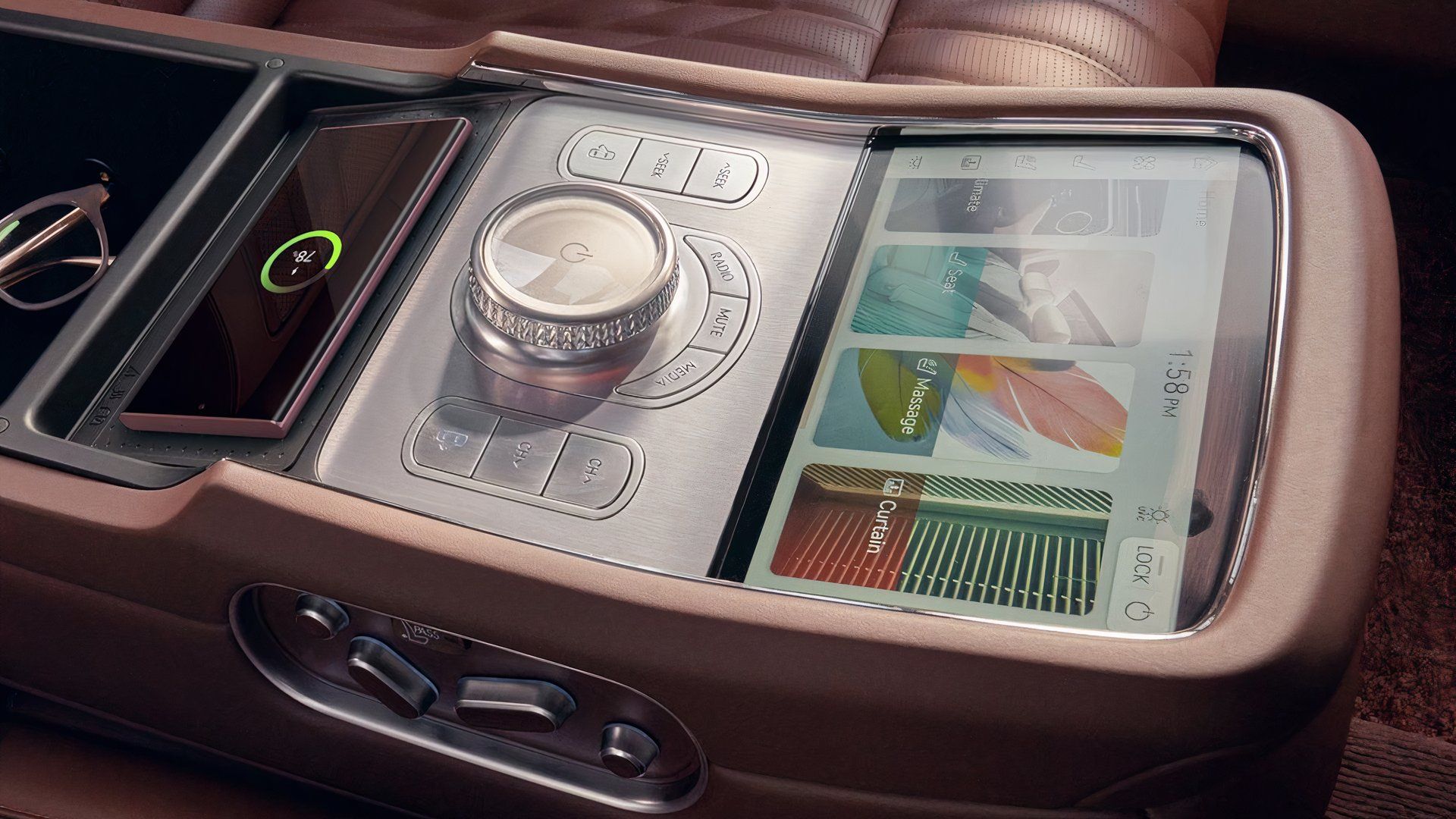
Genesis has been at the forefront of innovation in recent years. One notable development is the console-mounted UV sterilizer, which uses a powerful UV light to disinfect items like smartphones. This feature is available in models such as the Genesis G90.

Another innovation currently in development is a metal-coated windshield designed to defrost quickly in cold temperatures. This technology uses a special coating that can be powered by an EV’s high-voltage system, eliminating visible tungsten filaments and clearing frozen windows faster than conventional methods while using 10% less electricity.

Runners Up and Honorable Mentions

In addition to the main rankings, several vehicles received awards for specific features. The Land Rover Defender won a comfort and convenience award for its advanced air purification system. The Toyota Land Cruiser and Sequioa tied for the mass-market comfort and convenience award for their camera rearview mirror technology.

The Genesis GV80 earned the connected vehicle award for its phone-based digital key system, while the Hyundai Santa Fe received the same award in the mainstream category. The GMC Hummer EV SUV was recognized for its active lane change assist system, and the Santa Fe also received a driver assist award for its blind spot camera system. The Kia EV9 rounded out the awards with the best one-pedal driving system.

Exclusions and Methodology

Notably, Tesla and Rivian were excluded from this year’s study due to major product updates during the data collection period. The study relied on responses from over 76,000 new 2025 model-year vehicle owners surveyed between June 2024 and March 2025. The exclusion of these brands was likely due to the lack of consistent data or mixed results from their updated offerings.

Labels

APPEALING America Amérique Artprint Avec Bandouilliere| Berlin Bettmann Bijoux Black Boutique Buit your own eiffel Cadeau Cadeaux Cairngorms Canada Chateaubriand. Chopin Claude Coffret Count down Couple Delaunay Design Durrens Edition Eiffel Eiffel Photo Eiffel in soap Eiffel pajamas Eiffelturm Grösse Größe HEBAGermany Honeymoon Thrills at Cheaper Deals Kunstdruck Laiton Leinwandbild Magasin Main Modernism Mémoires National Noir P.... Paris Park Photo Photographic Photos Pictorial Poster Print Reviews Robin Romantic Honeymoon Rouge| Royal Ruth Révolution STUNNING Savon Sculpté Sehenswürdigkeiten Souvenir Souvenirs States Stylobille Timothy Toile Toiles Top Island Destination Tour Tower United Wampler Wedding anniversary in Paris Wedding anniversary celebration in Paris acheter aimantée album amazonfr. angleterre années autumn baptême barcelone berlinois bilingue bois bordeaux boutiques boîte cavalier chansons chili comme d'antan d'art d'ici d'outretombe. d'un dimanche débuts eiffel 65 eiffel demos eiffel in bag eiffel in book eiffel in cake eiffel in canvas eiffel in lamp eiffel in rain eiffel in shirt eiffel in snow eiffel in software eiffel in sunrise eiffel in sunset eiffel kiss eiffel rain eiffel souvenir entretiens françaisanglais gens guerre honeymoon honeymoon destination hotel in paris hôte. job justice l'exposition ligne livraison mécanique n°01 n°019 n°033 n°039 n°047 n°09 n°51 obscurs officierà orchestres originaux patines... pittoresque polonais portraits pour route santiago. schwarzweiss shiny strange eiffel picture sudouest suite suivre. taking talents tirage tivoli tours témoignages universelle usus.i valparaiso vieilles vieux voyage événements